 Canvers Media
Marketing That Talks About the Business Instead of the Customer
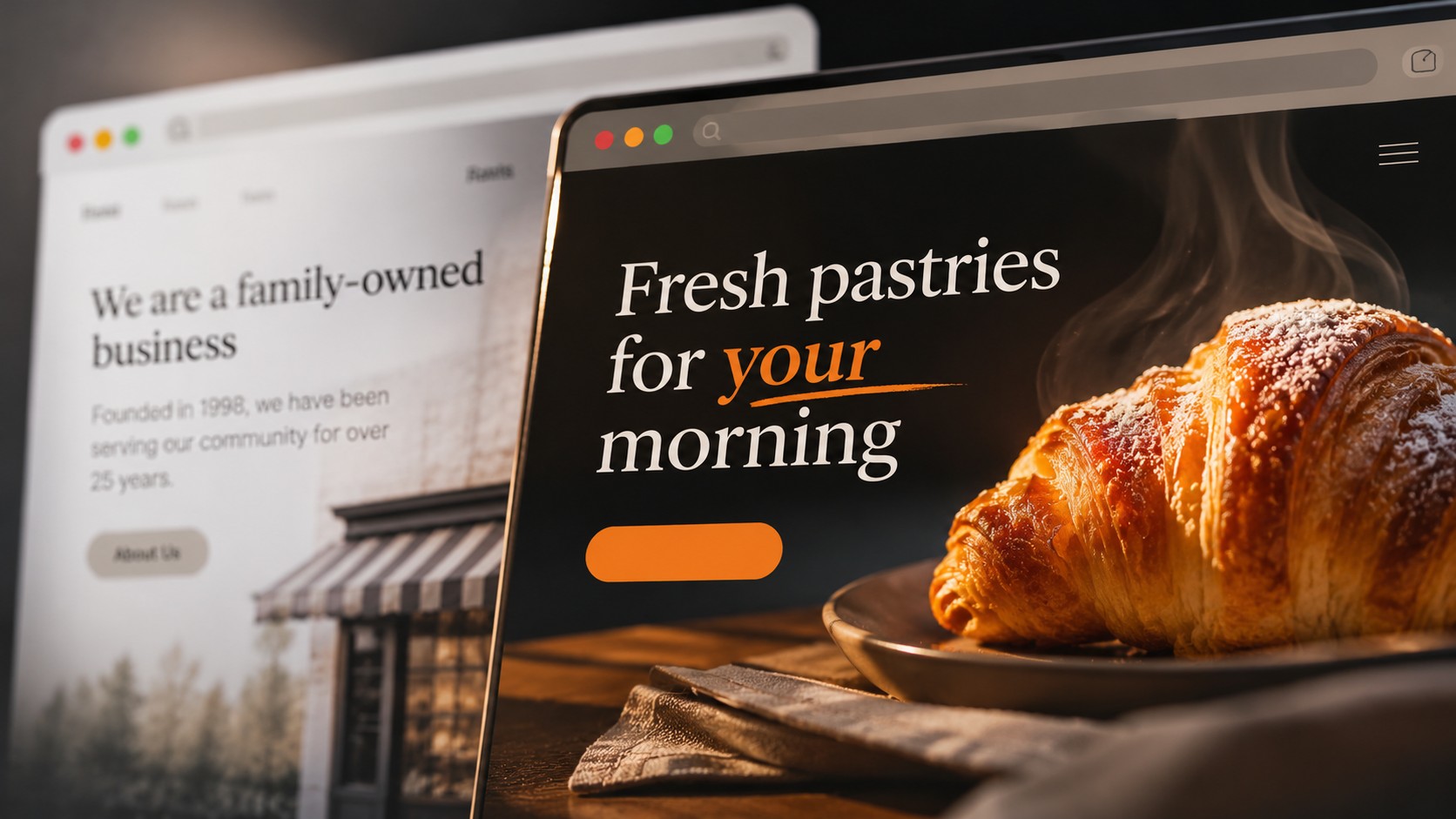
Open ten small-business websites at random and read only the first sentence on each homepage. Chances are most of them start with 'We are...' or 'Founded in...' or the company name itself. Not one word about why the visitor clicked in the first place. This is not a copywriting accident, it is a pattern that shows up everywhere from homepage headlines to Instagram captions to in-store signage, and it quietly costs businesses the customers who were already standing at the door.
The Habit of Self-Talk
A dental clinic's homepage leads with '35 years serving the community' instead of 'Stop dreading your next visit.' A bakery's Instagram caption says 'Today we proofed the dough for six hours' instead of showing the warm croissant someone is about to bite into. A gym ad lists 'state-of-the-art equipment and certified trainers' instead of 'Finally fit into the clothes you miss.' None of this is dishonest, it is just inward-facing. It answers the questions the owner cares about, how long we've existed, how hard we worked, what we bought, instead of the one question the visitor actually has, which is simply whether this is for them.
What The Customer Is Scanning For
People do not read small-business websites, they scan them looking for themselves. A visitor's eyes move searching for a mirror, not a resume. When a business talks about itself first, the message reads like background noise, forgettable at best, which is part of why the message is forgotten the moment someone looks away before it even fully lands. Flip the headline from 'Serving families since 1998' to 'Get your kid's cavity fixed without the tears' and the same clinic, same care, same price suddenly speaks to the one person actually reading it.
- Headline opens with the business name or the word 'we'
- The About page is longer and more detailed than any service page
- Social captions describe the process of making something, not the result for the customer
- Reviews and testimonials sit below paragraphs of self-praise
Flipping The Lens
A quick test: print your homepage and count how many sentences start with 'we' or 'our' versus 'you' or 'your.' Rewrite the worst offender first. A clothing shop can turn 'Our new fall collection has arrived' into 'Find the jacket that gets you through the whole winter' without changing a single product. This matters even more for businesses that look exactly like every competitor, because customer-centered language is often the only real differentiator left once products and prices look identical. At Canvers, rewriting a homepage around the customer's actual problem is frequently the single most impactful edit we make before touching a line of website design.
Related articles
 Marketing
The Quiet Gap Between Being Seen and Being Bought From
Thousands of followers, top Google ranking, still no sales. Here's the real gap between visibility and actually getting chosen.
Read → Marketing
A Practical Guide to Content Marketing for Small Businesses
Content marketing basics for small businesses: what to write, where to post, and how to stay consistent without burning out.
Read → Sales
Why Interested People Ask Once and Then Quietly Disappear
A single reply rarely closes the gap between curiosity and buying. Here's why interested customers ask once and never come back.
Read →